
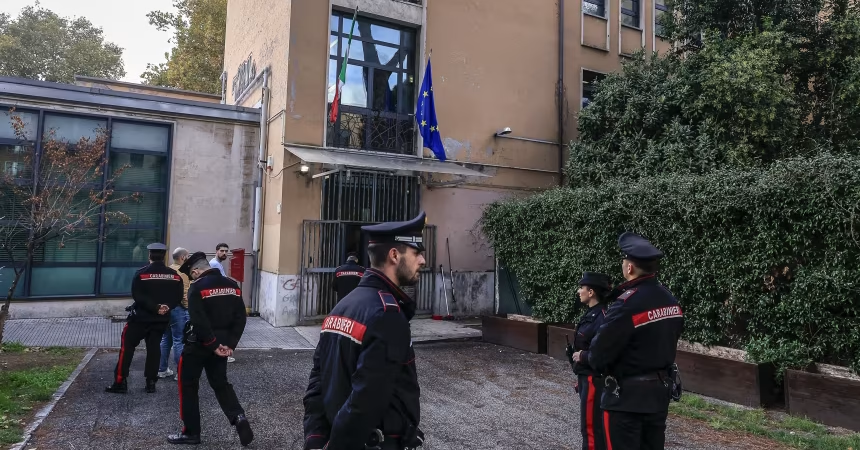
An unprecedented wave of bomb threats across Europe has left the bloc struggling to respond, as it remains unclear who is behind the incidents.
The threats, which are mainly understood to have been sent via emails and have so far all proven false, have impacted multiple media broadcasters, more than 50 flights, thousands of schools and at least one cruise ship across the continent, posing an increasingly urgent security challenge for European authorities.
Analysts say the hoaxes have exposed the vulnerability of Europe’s public infrastructure to anonymous and hard-to-trace messages and highlight the bloc’s need for a more coordinated response.
The bomb threats targeting European flights were taken seriously by authorities and elicited strong action, which varied between countries. While some authorities diverted flights to other airports, others – such as Hungary and France – scrambled fighter jets to escort the affected passenger planes.Some are calling for European countries to replace fragmented, nation-by-nation reactions with a bloc-wide security framework. The chief executive of budget Hungarian airline Wizz Air, József Váradi, spoke Thursday of the need for more harmonized security procedures and alluded to the possible creation of a central body to manage such hoaxes.
He revealed that he had recently held a meeting with European Commission officials to push for a coordinated response. “But this is a very hot potato because of the sovereign nation state concept, and no country wants to concede on this matter, ” Váradi said in a post-earnings call Thursday.
‘Scrambled response’
A threat targeting an airline operating across several countries could involve several law enforcement agencies, meaning that greater information-sharing between countries could prove key to identifying patterns and determining the origin and validity of the threat.